




Fill in the blank with appropriate words.
The umbrella-like cap of the mushroom is known as ________.
Answer
 Verified
576k+ views
Hint: A mushroom is a fungal fruiting body that consists of three main parts- a stem, a cap, and gills under the cap. The gills produce spores to help the fungus spread.
Complete step by step answer:
The umbrella-like cap of the mushroom is known as pileus.
The pileus is a characteristic of fungal organisms such as agarics, some polypores, tooth fungi, boletes, and ascomycetes. It is the cap-shaped part of the fungal fruiting bodies that provides support to the hymenium that may consist of lamellae, tubes, or teeth on the underside.
Additional Information: Mushrooms are fruiting bodies of fungi typically found on soil or on its food source. They usually have a stipe (stem), pileus (cap), and lamellae (gills).
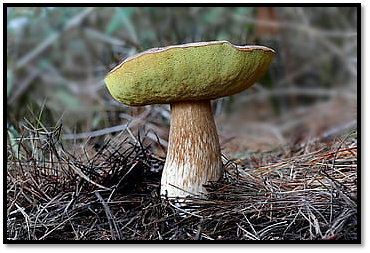
The pileus is the cap-like part that has the lamellae underneath it. They can be of many shapes but the most common is the convex ones which are found in button mushrooms, some amanita species, and boletes. Parasol mushrooms have umbos which are knobby protrusions at the center of the cap and therefore are called umbonate. Chanterelle has funnel-shaped pileus and these are known as infundibulum. Although these shapes are characteristics of the mushrooms it can change over the course of the development cycle, for example, convex pileus often expands as they mature and become flat.
Note: Mushrooms have mainly three parts-the stem known as stipe, the cap is known as pileus, and the gills called lamellae. The cap is supported by the stipe which is composed of sterile hyphal tissue, this also helps in mediating spores because it makes the mushroom elevated. Some mushrooms may not have a stripe e.g. cup fungi, puffballs, jelly fungi, etc. In the third part, the lamellae are papery hymenophore ribs found under the pileus and help the mushroom in the dispersal of spores.
Complete step by step answer:
The umbrella-like cap of the mushroom is known as pileus.
The pileus is a characteristic of fungal organisms such as agarics, some polypores, tooth fungi, boletes, and ascomycetes. It is the cap-shaped part of the fungal fruiting bodies that provides support to the hymenium that may consist of lamellae, tubes, or teeth on the underside.
Additional Information: Mushrooms are fruiting bodies of fungi typically found on soil or on its food source. They usually have a stipe (stem), pileus (cap), and lamellae (gills).
The pileus is the cap-like part that has the lamellae underneath it. They can be of many shapes but the most common is the convex ones which are found in button mushrooms, some amanita species, and boletes. Parasol mushrooms have umbos which are knobby protrusions at the center of the cap and therefore are called umbonate. Chanterelle has funnel-shaped pileus and these are known as infundibulum. Although these shapes are characteristics of the mushrooms it can change over the course of the development cycle, for example, convex pileus often expands as they mature and become flat.
Note: Mushrooms have mainly three parts-the stem known as stipe, the cap is known as pileus, and the gills called lamellae. The cap is supported by the stipe which is composed of sterile hyphal tissue, this also helps in mediating spores because it makes the mushroom elevated. Some mushrooms may not have a stripe e.g. cup fungi, puffballs, jelly fungi, etc. In the third part, the lamellae are papery hymenophore ribs found under the pileus and help the mushroom in the dispersal of spores.
Recently Updated Pages
Master Class 11 Computer Science: Engaging Questions & Answers for Success

Master Class 11 Business Studies: Engaging Questions & Answers for Success
Master Class 11 Economics: Engaging Questions & Answers for Success
Master Class 11 English: Engaging Questions & Answers for Success
Master Class 11 Maths: Engaging Questions & Answers for Success
Master Class 11 Biology: Engaging Questions & Answers for Success
Trending doubts
One Metric ton is equal to kg A 10000 B 1000 C 100 class 11 physics CBSE
There are 720 permutations of the digits 1 2 3 4 5 class 11 maths CBSE
Discuss the various forms of bacteria class 11 biology CBSE
Draw a diagram of a plant cell and label at least eight class 11 biology CBSE
State the laws of reflection of light
10 examples of friction in our daily life