




Golgi apparatus is commonly present in
(a) Near mitochondria
(b) Near chloroplasts
(c) Perinuclear area
(d) Germ cells
Answer
 Verified
589.5k+ views
Hint: Golgi bodies or Golgi apparatus are mainly involved in the packaging of proteins. These proteins are synthesized in an endoplasmic reticulum which is found closely attached to the nucleus.
Complete answer:
Golgi apparatus is a cell organelle found in eukaryotic cells and is majorly engaged in the packaging of cellular proteins. It consists of folded and flattened membranes which are filled with cytoplasm. Each membrane has two faces, cis or convex face and trans or concave face. One of the sides is facing the endoplasmic reticulum and the other side is facing the plasma membrane, out of these the side facing the endoplasmic reticulum has a thinner membrane than the other.
The membranes of the Golgi apparatus are called cisternae or face. Cis face is also called as the convex or forming face. This face receives vesicles containing enzyme or protein from the ER and they have very thin membranes. A Trans face is also called a concave or maturing face. This face releases golgian vacuoles that contain modified enzymes or proteins. This face has thicker membranes. Proteins synthesized in the endoplasmic reticulum are packed into vesicles that fuse with the Golgi apparatus which are then modified and destined for secretion. Apart from this, the Golgi apparatus is also involved in lipid transport and lysosome formation.
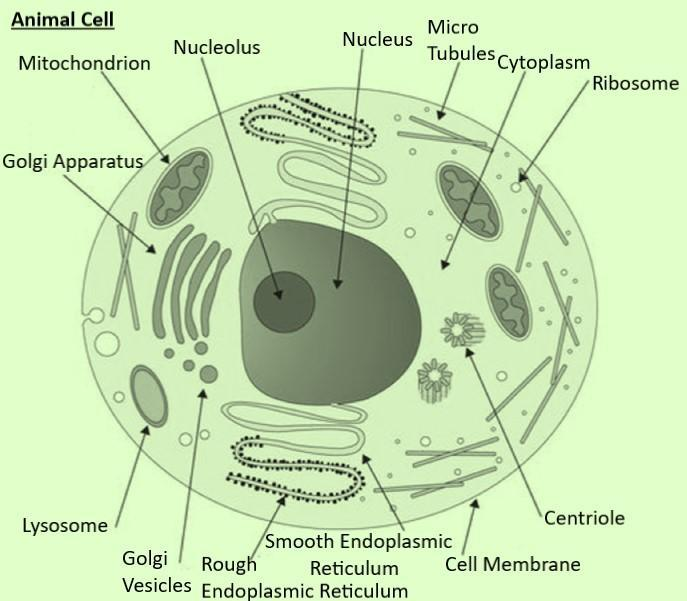
So, the correct answer is the ‘Perinuclear area.’
Note: The structure and function of the Golgi apparatus have a close relation. Individual membranes of the Golgi apparatus have a different assortment of enzymes which allow progressive modification of cargo proteins as they travel from trans face to cis face.
Complete answer:
Golgi apparatus is a cell organelle found in eukaryotic cells and is majorly engaged in the packaging of cellular proteins. It consists of folded and flattened membranes which are filled with cytoplasm. Each membrane has two faces, cis or convex face and trans or concave face. One of the sides is facing the endoplasmic reticulum and the other side is facing the plasma membrane, out of these the side facing the endoplasmic reticulum has a thinner membrane than the other.
The membranes of the Golgi apparatus are called cisternae or face. Cis face is also called as the convex or forming face. This face receives vesicles containing enzyme or protein from the ER and they have very thin membranes. A Trans face is also called a concave or maturing face. This face releases golgian vacuoles that contain modified enzymes or proteins. This face has thicker membranes. Proteins synthesized in the endoplasmic reticulum are packed into vesicles that fuse with the Golgi apparatus which are then modified and destined for secretion. Apart from this, the Golgi apparatus is also involved in lipid transport and lysosome formation.
So, the correct answer is the ‘Perinuclear area.’
Note: The structure and function of the Golgi apparatus have a close relation. Individual membranes of the Golgi apparatus have a different assortment of enzymes which allow progressive modification of cargo proteins as they travel from trans face to cis face.
Recently Updated Pages
Master Class 11 Computer Science: Engaging Questions & Answers for Success

Master Class 11 Business Studies: Engaging Questions & Answers for Success
Master Class 11 Economics: Engaging Questions & Answers for Success
Master Class 11 English: Engaging Questions & Answers for Success
Master Class 11 Maths: Engaging Questions & Answers for Success
Master Class 11 Biology: Engaging Questions & Answers for Success
Trending doubts
One Metric ton is equal to kg A 10000 B 1000 C 100 class 11 physics CBSE
There are 720 permutations of the digits 1 2 3 4 5 class 11 maths CBSE
Discuss the various forms of bacteria class 11 biology CBSE
Draw a diagram of a plant cell and label at least eight class 11 biology CBSE
State the laws of reflection of light
Explain zero factorial class 11 maths CBSE