




In diatoms, the nucleus generally lies in
(A)Epivalve
(B)Hypovalve
(C)Central vacuole
(D)Peripheral cytoplasm
Answer
 Verified
567.3k+ views
Hint: In a Diatomic cell, the nucleus is generally present in the middle area of the cell but can migrate to specific sites in the cell to prepare for cell division. The DNA inside the nucleus is organized in large numbers of very small chromosomes.
Complete answer:
In the case of diatoms, the nucleus lies inside the central vacuole.
The central vacuole is a large vacuole, mainly found in the case of plants that stores water and maintains turgor pressure in the cell. It is responsible for pushing the content of the cell towards the cell membrane and allows the cell to take more light energy for making food through photosynthesis. Although vacuoles are seen in the case of animals, protists, fungi, and other bacterial cells, central Vacuole is only found in plant cells.
Additional Information:
In a diatomic cell, we can see two thecae that compose the diatom by fitting together like a petri dish. These two themes are- epitheca and hypotheca. Each of the two theca has two valve faces- epivalve and hypovalve and the valve mantle. The region of overlap is known as cingulum and it is surrounded by girdle bands.
In the case of protists, the region of peripheral cytoplasm contains membrane-bound organelles that can discharge their content slowly or quickly. Peripheral cytoplasm simply represents the margin or periphery region of the cell's cytoplasm.
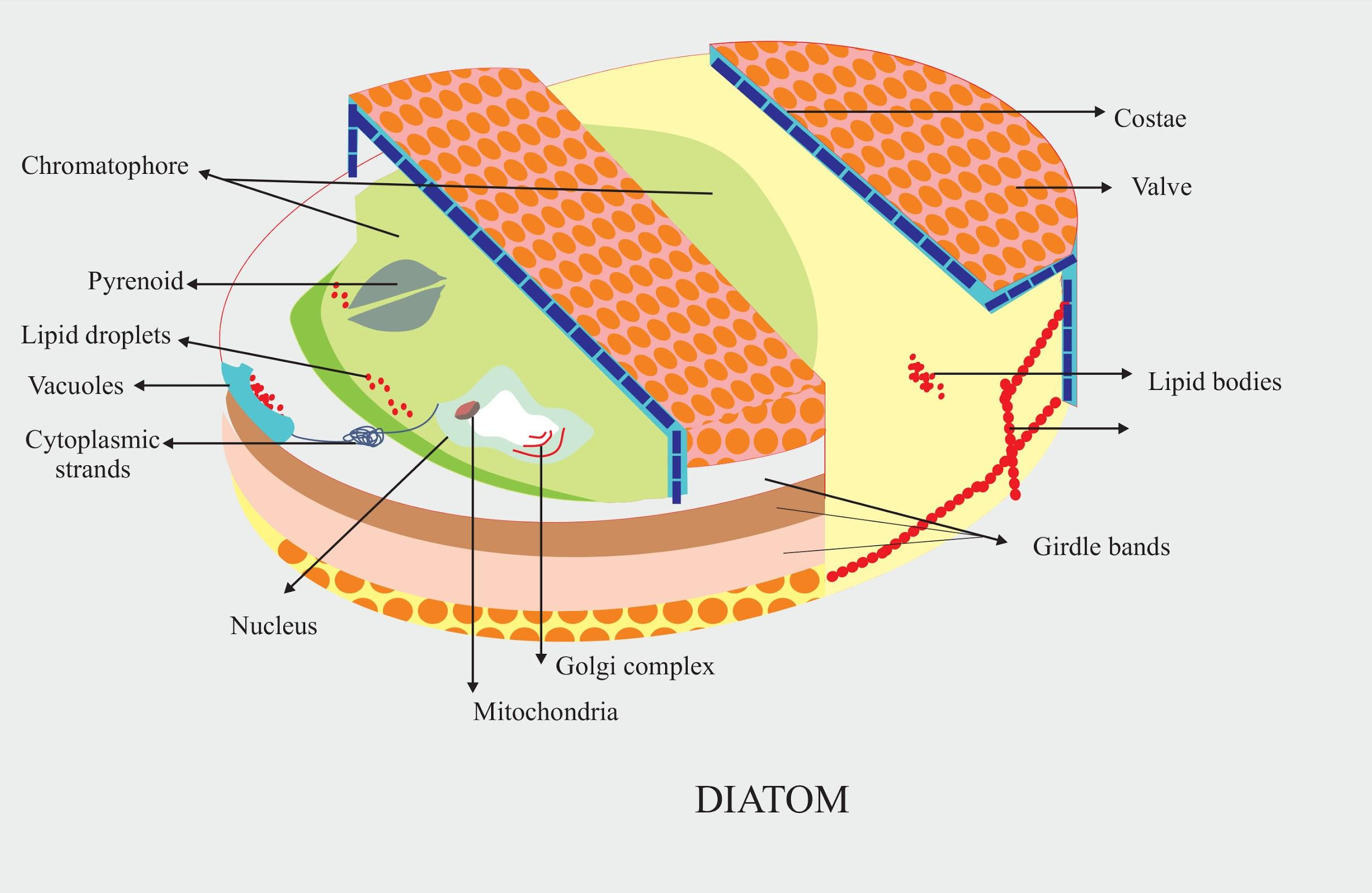
So, the correct answer is "Central vacuole".
Note: The central vacuole plays an important role in keeping the nucleus in a Diatomic cell. However, it has several other functions in different plants. The main of these is to maintain turgor pressure in the cells in the case of plants, fungi, or bacteria. This large vacuole can store a lot of water and swell up to maintain turgidity as well as store waste products and nutrients temporarily.
Complete answer:
In the case of diatoms, the nucleus lies inside the central vacuole.
The central vacuole is a large vacuole, mainly found in the case of plants that stores water and maintains turgor pressure in the cell. It is responsible for pushing the content of the cell towards the cell membrane and allows the cell to take more light energy for making food through photosynthesis. Although vacuoles are seen in the case of animals, protists, fungi, and other bacterial cells, central Vacuole is only found in plant cells.
Additional Information:
In a diatomic cell, we can see two thecae that compose the diatom by fitting together like a petri dish. These two themes are- epitheca and hypotheca. Each of the two theca has two valve faces- epivalve and hypovalve and the valve mantle. The region of overlap is known as cingulum and it is surrounded by girdle bands.
In the case of protists, the region of peripheral cytoplasm contains membrane-bound organelles that can discharge their content slowly or quickly. Peripheral cytoplasm simply represents the margin or periphery region of the cell's cytoplasm.
So, the correct answer is "Central vacuole".
Note: The central vacuole plays an important role in keeping the nucleus in a Diatomic cell. However, it has several other functions in different plants. The main of these is to maintain turgor pressure in the cells in the case of plants, fungi, or bacteria. This large vacuole can store a lot of water and swell up to maintain turgidity as well as store waste products and nutrients temporarily.
Recently Updated Pages
Master Class 11 Computer Science: Engaging Questions & Answers for Success

Master Class 11 Business Studies: Engaging Questions & Answers for Success
Master Class 11 Economics: Engaging Questions & Answers for Success
Master Class 11 English: Engaging Questions & Answers for Success
Master Class 11 Maths: Engaging Questions & Answers for Success
Master Class 11 Biology: Engaging Questions & Answers for Success
Trending doubts
One Metric ton is equal to kg A 10000 B 1000 C 100 class 11 physics CBSE
There are 720 permutations of the digits 1 2 3 4 5 class 11 maths CBSE
Discuss the various forms of bacteria class 11 biology CBSE
Draw a diagram of a plant cell and label at least eight class 11 biology CBSE
State the laws of reflection of light
10 examples of friction in our daily life