




In the human female, when does ovulation occur during the menstrual cycle?
(A)At the end of the proliferative phase
(B)In the middle of the secretory phase
(C)Just before the end of the secretory phase
(D) At the beginning of the proliferative phase
Answer
 Verified
571.8k+ views
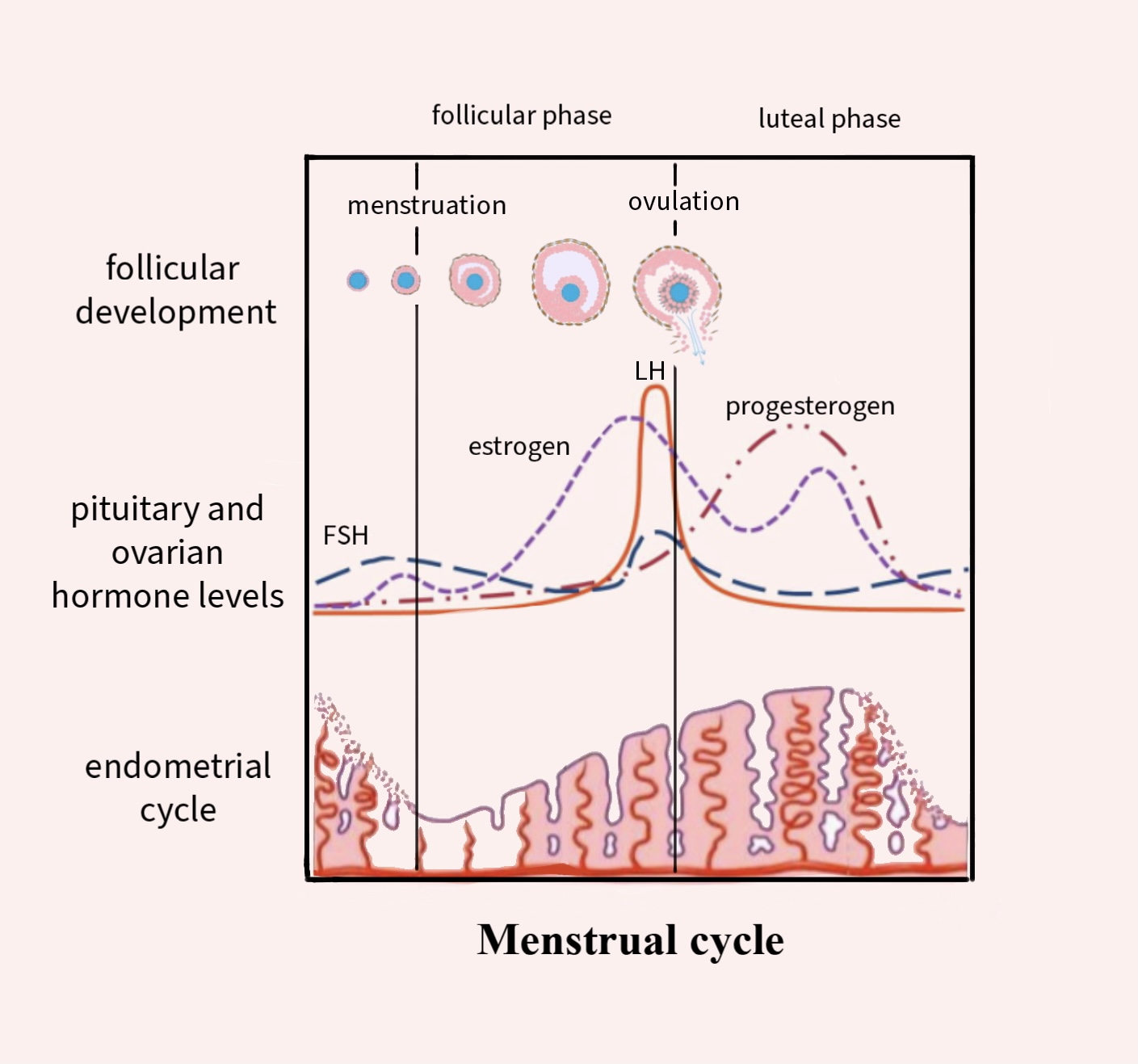
Hint: In the human female, ovulation occurs during the menstrual cycle when 17-beta-estradiol levels are at a high due to the follicle maturation and increased production of the hormone. The endometrium is thickened at this time.
Complete answer:
In the human female, ovulation occurs during the menstrual cycle at the end of the proliferative phase. The proliferative endometrium stage is additionally called the follicular phase. The term “proliferative” means cells are multiplying and spreading. During this phase, your estrogen levels rise. This causes your endometrium to thicken. Your ovaries also prepare an egg for release.
Additional Information: Rising estrogen levels during the follicular phase trigger your pituitary to release LH. This is often what starts the process of ovulation.
Ovulation is the process when your ovary releases a mature egg. The egg travels from the Fallopian tube toward the uterus to be fertilized by sperm.
The ovulation phase is the only time during your cycle when you can get pregnant. you'll be able to tell that you’re ovulating by symptoms like these:
-a slight rise in basal body temperature
-thicker discharge that has the feel or appearance of egg whites.
After the egg is released from the follicle, it changes into the corpus luteum. This structure releases hormones, mainly progesterone and a few estrogens. The increase in hormones keeps your uterine lining thick and prepared for an embryo to implant. If the woman is pregnant, her body will produce human chorionic gonadotropin (hCG). This is often the hormone pregnancy tests detect. It helps keep the uterine lining thick and maintain the corpus luteum.
So, the correct answer is ‘At the end of the proliferative phase’.
Note: Ovulation happens at around day 14 if you've got a 28-day cycle — right within the middle of your cycle. It lasts for about 24 hours. After a day, the egg will die or even it can dissolve if it isn’t fertilized. The proliferative phase is commonly known as the follicular phase.
Complete answer:
In the human female, ovulation occurs during the menstrual cycle at the end of the proliferative phase. The proliferative endometrium stage is additionally called the follicular phase. The term “proliferative” means cells are multiplying and spreading. During this phase, your estrogen levels rise. This causes your endometrium to thicken. Your ovaries also prepare an egg for release.
Additional Information: Rising estrogen levels during the follicular phase trigger your pituitary to release LH. This is often what starts the process of ovulation.
Ovulation is the process when your ovary releases a mature egg. The egg travels from the Fallopian tube toward the uterus to be fertilized by sperm.
The ovulation phase is the only time during your cycle when you can get pregnant. you'll be able to tell that you’re ovulating by symptoms like these:
-a slight rise in basal body temperature
-thicker discharge that has the feel or appearance of egg whites.
After the egg is released from the follicle, it changes into the corpus luteum. This structure releases hormones, mainly progesterone and a few estrogens. The increase in hormones keeps your uterine lining thick and prepared for an embryo to implant. If the woman is pregnant, her body will produce human chorionic gonadotropin (hCG). This is often the hormone pregnancy tests detect. It helps keep the uterine lining thick and maintain the corpus luteum.
So, the correct answer is ‘At the end of the proliferative phase’.
Note: Ovulation happens at around day 14 if you've got a 28-day cycle — right within the middle of your cycle. It lasts for about 24 hours. After a day, the egg will die or even it can dissolve if it isn’t fertilized. The proliferative phase is commonly known as the follicular phase.
Recently Updated Pages
Master Class 11 Computer Science: Engaging Questions & Answers for Success

Master Class 11 Business Studies: Engaging Questions & Answers for Success
Master Class 11 Economics: Engaging Questions & Answers for Success
Master Class 11 English: Engaging Questions & Answers for Success
Master Class 11 Maths: Engaging Questions & Answers for Success
Master Class 11 Biology: Engaging Questions & Answers for Success
Trending doubts
One Metric ton is equal to kg A 10000 B 1000 C 100 class 11 physics CBSE
There are 720 permutations of the digits 1 2 3 4 5 class 11 maths CBSE
Discuss the various forms of bacteria class 11 biology CBSE
Draw a diagram of a plant cell and label at least eight class 11 biology CBSE
State the laws of reflection of light
Explain zero factorial class 11 maths CBSE