




How many pulmonary arteries empty into the right atrium of the heart?
Answer
 Verified
562.8k+ views
Hint: The human circulatory system involves the heart, blood, and blood vessels that function together to provide nutrients, hormones, etc. to different organs and tissue of the body. The heart is the muscle that is able to transport blood to different organs and tissue. Blood vessels carry oxygenated and deoxygenated blood within them. Blood, we know, carries nutrients, gases, etc. to the organs. It also takes away waste material from the organs that are then filtered out and excreted from the body.
Complete answer:
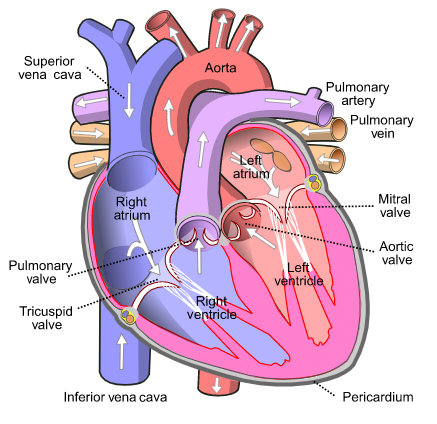
The blood enters the right atrium through two veins, the superior vena cava and inferior vena cava. They carry the deoxygenated blood into the right atrium. From the right atrium, the blood enters the right ventricles and is then transported to the lungs for oxygenation. This blood is transported by the pulmonary artery.
Once the blood is oxygenated it is carried back to the heart by the pulmonary vein. The oxygenated blood enters the left atrium and then flows into the left ventricles. From the left ventricles, the blood leaves the heart through the aorta. The oxygenated blood is transported to various organs and tissues.
Generally, arteries carry oxygenated blood and veins carry deoxygenated blood. However, in the case of pulmonary blood vessels that is not the case. The pulmonary artery carries the deoxygenated blood from the heart to the lungs. The oxygenated blood from the lungs is carried back to the heart by the pulmonary vein. Pulmonary arteries do not empty into the right atrium.
Note: Arteries branch into smaller blood vessels called arterioles. Veins branch into venules. Capillaries are another important blood vessel. Capillaries act as a bridge between the veins and the arteries. Since capillaries have thin walls exchange of materials is possible. The capillaries of various organs will take away waste material from it and transfer it to the venules that then merge into veins. It will provide nutrients and oxygen to the arterioles that will then merge to form the arteries.
Complete answer:
The blood enters the right atrium through two veins, the superior vena cava and inferior vena cava. They carry the deoxygenated blood into the right atrium. From the right atrium, the blood enters the right ventricles and is then transported to the lungs for oxygenation. This blood is transported by the pulmonary artery.
Once the blood is oxygenated it is carried back to the heart by the pulmonary vein. The oxygenated blood enters the left atrium and then flows into the left ventricles. From the left ventricles, the blood leaves the heart through the aorta. The oxygenated blood is transported to various organs and tissues.
Generally, arteries carry oxygenated blood and veins carry deoxygenated blood. However, in the case of pulmonary blood vessels that is not the case. The pulmonary artery carries the deoxygenated blood from the heart to the lungs. The oxygenated blood from the lungs is carried back to the heart by the pulmonary vein. Pulmonary arteries do not empty into the right atrium.
Note: Arteries branch into smaller blood vessels called arterioles. Veins branch into venules. Capillaries are another important blood vessel. Capillaries act as a bridge between the veins and the arteries. Since capillaries have thin walls exchange of materials is possible. The capillaries of various organs will take away waste material from it and transfer it to the venules that then merge into veins. It will provide nutrients and oxygen to the arterioles that will then merge to form the arteries.
Recently Updated Pages
Master Class 11 Computer Science: Engaging Questions & Answers for Success

Master Class 11 Business Studies: Engaging Questions & Answers for Success
Master Class 11 Economics: Engaging Questions & Answers for Success
Master Class 11 English: Engaging Questions & Answers for Success
Master Class 11 Maths: Engaging Questions & Answers for Success
Master Class 11 Biology: Engaging Questions & Answers for Success
Trending doubts
One Metric ton is equal to kg A 10000 B 1000 C 100 class 11 physics CBSE
There are 720 permutations of the digits 1 2 3 4 5 class 11 maths CBSE
Discuss the various forms of bacteria class 11 biology CBSE
Draw a diagram of a plant cell and label at least eight class 11 biology CBSE
State the laws of reflection of light
Explain zero factorial class 11 maths CBSE