




Read the following statements about fossilization:
(i)Animals and plants get fossilized and preserved in volcanic ash.
(ii)Replacement of organic parts by mineral decomposition is called petrification which occurs only of hard parts, e.g. bones.
(iii)Casts are prints of leaves, stem, etc in soft mud which become fossilized.
(iv)Fossils present in the upper strata of earth are older than those present in lower strata.
Of the above statements:
(a)(i) and (ii) are incorrect
(b)(ii), (iii) and (iv) are incorrect
(c)(ii) and (iv) are correct
(d)(iii) and (iv) are incorrect
Answer
 Verified
571.8k+ views
Hint: The impression of an organism being left in rock also results from fossilization. The climate where an organism died and the materials that made up the body of the organism while it was alive are two basic natural factors regulating the fossilization process.
Complete answer:
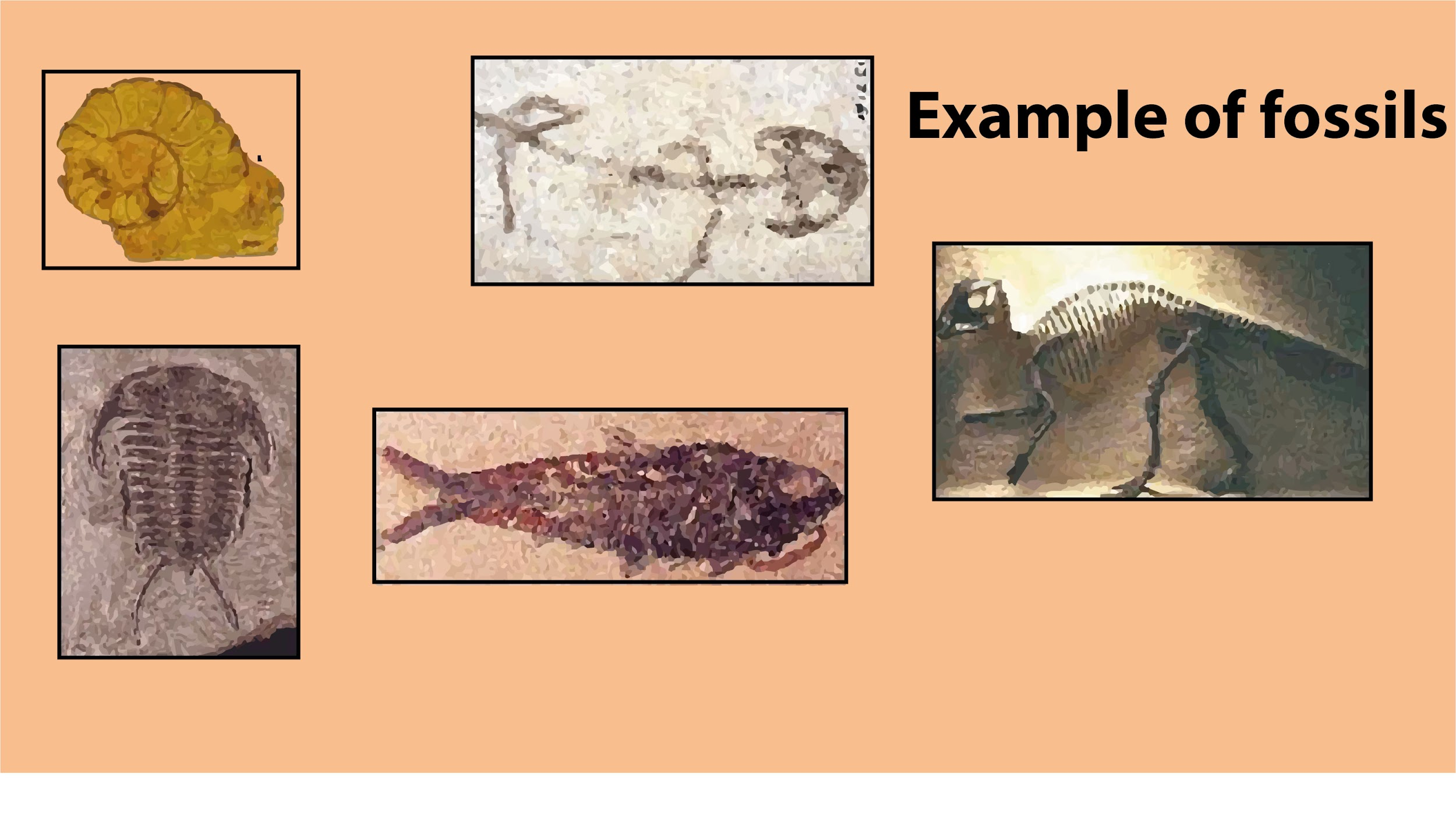
Fossilization is the method of the preservation of an animal or plant in a rough, petrified form.
The mechanism by which a plant or animal becomes a fossil is fossilization. This process is incredibly rare and remains as fossils just a tiny fraction of the plants and animals that have lived in the past 600 million years.
Considering the millions of fossils that have been found over the years, and the many billions still in the rocks, this might be shocking. Such plants and animals that become fossils typically undergo several main phases, with some exceptions.
-First, only the "hard parts" (bone, shell, teeth) are left behind by the soft tissue that remains throughout life.
-Second, it is possible to transport and crack hard parts. This results in imperfect images of the living animal being the fossilized remains. It is much more common to find a shell or bone fragment than it is to find a full skeleton.
-Third and most essential, buried, and altered hard tissues. In certain cases, when minerals are slowly dissolved and replaced by new ones, this means removing the original material from which the hard parts were produced. Most of the time, without replacing the new material, a hard part is dissolved, leaving behind only an impression or mold of the original animal. It would create a cast of the original animal if this mold is filled with sand that is then cemented into rock.
So, the correct answer is, ‘(iii) and (iv) are incorrect’.
Note: The theory of superposition is based on the initial horizontality theory. The theory of superposition notes that each layer of rock is older than the one above it and younger than the one beneath it in an undeformed series of sedimentary rocks. Consequently, at the bottom are the oldest rocks in a series, and at the top are the youngest rocks.
The sediments at the bottom of the pile become rock with the passage of time and the deposition of more particles, and also with chemical modifications. conglomerate is the rock formed from gravel, sandstone formed from sand, mud becomes shale or mudstone, and fossils can become the skeletons of animals and plant parts.
Complete answer:
Fossilization is the method of the preservation of an animal or plant in a rough, petrified form.
The mechanism by which a plant or animal becomes a fossil is fossilization. This process is incredibly rare and remains as fossils just a tiny fraction of the plants and animals that have lived in the past 600 million years.
Considering the millions of fossils that have been found over the years, and the many billions still in the rocks, this might be shocking. Such plants and animals that become fossils typically undergo several main phases, with some exceptions.
-First, only the "hard parts" (bone, shell, teeth) are left behind by the soft tissue that remains throughout life.
-Second, it is possible to transport and crack hard parts. This results in imperfect images of the living animal being the fossilized remains. It is much more common to find a shell or bone fragment than it is to find a full skeleton.
-Third and most essential, buried, and altered hard tissues. In certain cases, when minerals are slowly dissolved and replaced by new ones, this means removing the original material from which the hard parts were produced. Most of the time, without replacing the new material, a hard part is dissolved, leaving behind only an impression or mold of the original animal. It would create a cast of the original animal if this mold is filled with sand that is then cemented into rock.
So, the correct answer is, ‘(iii) and (iv) are incorrect’.
Note: The theory of superposition is based on the initial horizontality theory. The theory of superposition notes that each layer of rock is older than the one above it and younger than the one beneath it in an undeformed series of sedimentary rocks. Consequently, at the bottom are the oldest rocks in a series, and at the top are the youngest rocks.
The sediments at the bottom of the pile become rock with the passage of time and the deposition of more particles, and also with chemical modifications. conglomerate is the rock formed from gravel, sandstone formed from sand, mud becomes shale or mudstone, and fossils can become the skeletons of animals and plant parts.
Recently Updated Pages
Master Class 10 Computer Science: Engaging Questions & Answers for Success

Master Class 10 General Knowledge: Engaging Questions & Answers for Success
Master Class 10 English: Engaging Questions & Answers for Success
Master Class 10 Social Science: Engaging Questions & Answers for Success
Master Class 10 Maths: Engaging Questions & Answers for Success
Master Class 10 Science: Engaging Questions & Answers for Success
Trending doubts
Which women's tennis player has 24 Grand Slam singles titles?
Who is the Brand Ambassador of Incredible India?
Why is there a time difference of about 5 hours between class 10 social science CBSE
The Equation xxx + 2 is Satisfied when x is Equal to Class 10 Maths
Which Country is Called "The Land of Festivals"?
What is Contraception List its four different methods class 10 biology CBSE