




Which of the following is a drawback of the four-kingdom classification given by Copeland?
(a) There was no separate kingdom for prokaryotes
(b) Fungi was included in Plantae
(c) Fungi was included in Animalia
(d) None of the above
Answer
 Verified
564.9k+ views
Hint: Linnaeus proposed a two-kingdom classification with Plantae and Animalia which did not distinguish between eukaryotes and prokaryotes, unicellular and multicellular organisms, and photosynthetic (green algae) and non-photosynthetic (fungi) organisms.
Complete Answer:
The drawback of the four-kingdom classification given by Copeland was that it included Fungi along with Plantae. This was not accurate because heterotrophic fungi (saprophytic) were placed along with autotrophic plants in Kingdom Plantae. Also despite the fact that both plants and fungi have a cell wall, their structure was very different as the cell wall of plants is made up of cellulose whereas the cell wall of fungi is made up of chitin. Other drawbacks of this four-kingdom classification are that viruses and symbiotic organisms like lichen were given no kingdom.
Additional information: Let us discuss the Five Kingdom Classification proposed by R.H.Whittaker.
The Five Kingdoms include Monera, Protista, Fungi, Plantae, and Animalia which were classified on the basis of cell structure, body organization, mode of nutrition, reproduction, and phylogenetic relationships.
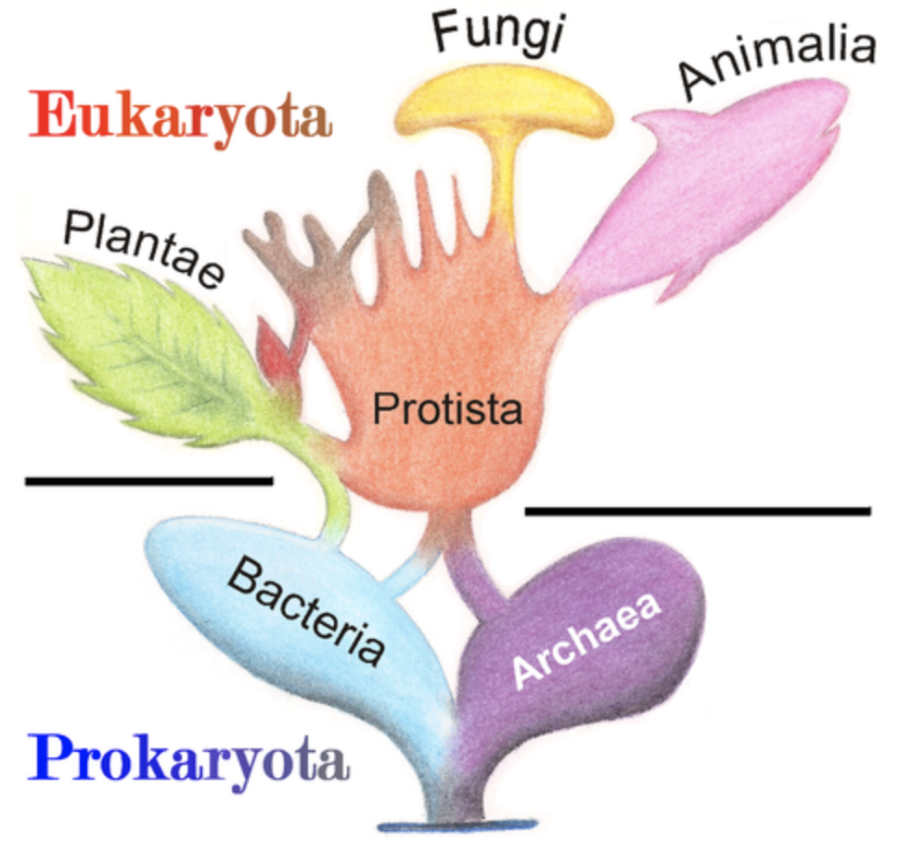
All unicellular prokaryotic organisms were placed under Protista and unicellular eukaryotes were placed under Monera.
All multicellular heterotrophic organisms will have chitinous cell walls placed under Fungi.
All autotrophic multicellular eukaryotes were placed under the Kingdom Plantae.
All multicellular eukaryotes with the holozoic mode of nutrition were placed under the Kingdom Animalia.
So, the correct option is ‘(b) Fungi was included in Plantae’.
Note: A three-domain system is also introduced which divides the Kingdom Monera into two domains known as Eubacteria and Archaebacteria, and the rest of the kingdoms are placed in the third domain. Thus, the three-domain classification has 6 kingdoms in it. It is seen that when organisms are classified on the basis of their phylogenetic relationship it is more accurate.
Complete Answer:
The drawback of the four-kingdom classification given by Copeland was that it included Fungi along with Plantae. This was not accurate because heterotrophic fungi (saprophytic) were placed along with autotrophic plants in Kingdom Plantae. Also despite the fact that both plants and fungi have a cell wall, their structure was very different as the cell wall of plants is made up of cellulose whereas the cell wall of fungi is made up of chitin. Other drawbacks of this four-kingdom classification are that viruses and symbiotic organisms like lichen were given no kingdom.
Additional information: Let us discuss the Five Kingdom Classification proposed by R.H.Whittaker.
The Five Kingdoms include Monera, Protista, Fungi, Plantae, and Animalia which were classified on the basis of cell structure, body organization, mode of nutrition, reproduction, and phylogenetic relationships.
All unicellular prokaryotic organisms were placed under Protista and unicellular eukaryotes were placed under Monera.
All multicellular heterotrophic organisms will have chitinous cell walls placed under Fungi.
All autotrophic multicellular eukaryotes were placed under the Kingdom Plantae.
All multicellular eukaryotes with the holozoic mode of nutrition were placed under the Kingdom Animalia.
So, the correct option is ‘(b) Fungi was included in Plantae’.
Note: A three-domain system is also introduced which divides the Kingdom Monera into two domains known as Eubacteria and Archaebacteria, and the rest of the kingdoms are placed in the third domain. Thus, the three-domain classification has 6 kingdoms in it. It is seen that when organisms are classified on the basis of their phylogenetic relationship it is more accurate.
Recently Updated Pages
Master Class 11 Computer Science: Engaging Questions & Answers for Success

Master Class 11 Business Studies: Engaging Questions & Answers for Success
Master Class 11 Economics: Engaging Questions & Answers for Success
Master Class 11 English: Engaging Questions & Answers for Success
Master Class 11 Maths: Engaging Questions & Answers for Success
Master Class 11 Biology: Engaging Questions & Answers for Success
Trending doubts
One Metric ton is equal to kg A 10000 B 1000 C 100 class 11 physics CBSE
There are 720 permutations of the digits 1 2 3 4 5 class 11 maths CBSE
Discuss the various forms of bacteria class 11 biology CBSE
Draw a diagram of a plant cell and label at least eight class 11 biology CBSE
State the laws of reflection of light
Explain zero factorial class 11 maths CBSE