




With which of the following can epidermis and gastrodermis of cnidarians be compared?
(a)Epidermis and endodermis of coelomates
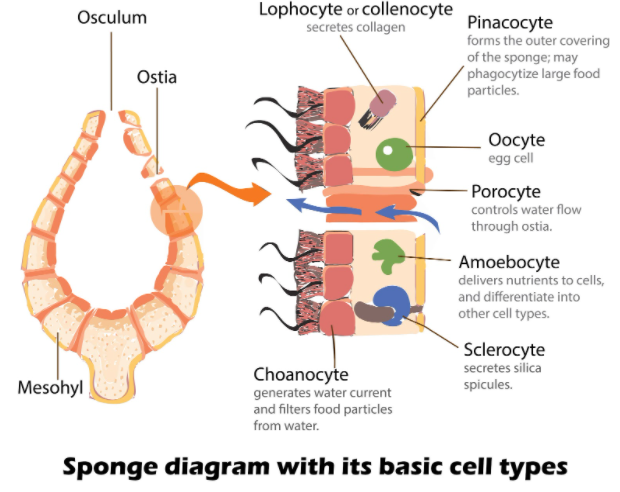
(b)Pinacoderm and choanderm of sponges
(c)Epidermis and mesoderm of Annelida
(d)None of the above
Answer
 Verified
578.7k+ views
Hint: The epidermis of cnidarians frequently bears flagella and/or microvilli also the skin cell layer covers the whole body of the polyp from the tentacles to the pedal disc, which forms a boundary with the external medium.
Complete answer:
In cnidarians, their gonads develop within the gastrodermis like anthozoans, scyphozoans, cubozoans, and staurozoa, mature gametes are released into the gastrovascular cavity and which are released through the mouth.
Cnidarians are essentially bags made from two cell layers. The outer ectoderm, or epidermis, contains the cnidocytes, the stinging cells that are characteristic of the phylum. The inner endoderm, or gastrodermis, lines the gut, which in some cnidarians can also be divided by septa as within the Anthozoa or elaborated into branching canals as in many Scyphozoa and between epidermis and gastrodermis is that the mesoglea, a layer of a jellylike substance which contains scattered cells and collagen fibers. The mouth is usually, but not always, surrounded by a hoop of tentacles.
Additional Information:
-Coelenterates possess an easy gastric cavity, where they digest their food.
-The gastric cavity communicates with the external environment with the help of one opening which is lined by an endodermal epithelial layer, or gastrodermis, majorly composed of epitheliomuscular cells, and also gland cells that secrete digestive enzyme and mucous-secreting cells.
-The centrosome region of coelenterates, or the gastric column, contains a bigger proportion of interstitial undifferentiated stem cells in contrast to the top or foot regions made from terminally differentiated cells.
-Cnidocytes contain a specialized, secreted organelle referred to as cnida.
So, the correct answer is, ‘Pinacoderm and choanderm of sponges.’
Note: -External fertilization is typical in cnidarians, but internal fertilization also occurs within some cnidarians that brood their embryos.
-One of the well-known phenomena in cnidarian reproduction is stony coral spawning events.
Complete answer:
In cnidarians, their gonads develop within the gastrodermis like anthozoans, scyphozoans, cubozoans, and staurozoa, mature gametes are released into the gastrovascular cavity and which are released through the mouth.
Cnidarians are essentially bags made from two cell layers. The outer ectoderm, or epidermis, contains the cnidocytes, the stinging cells that are characteristic of the phylum. The inner endoderm, or gastrodermis, lines the gut, which in some cnidarians can also be divided by septa as within the Anthozoa or elaborated into branching canals as in many Scyphozoa and between epidermis and gastrodermis is that the mesoglea, a layer of a jellylike substance which contains scattered cells and collagen fibers. The mouth is usually, but not always, surrounded by a hoop of tentacles.
Additional Information:
-Coelenterates possess an easy gastric cavity, where they digest their food.
-The gastric cavity communicates with the external environment with the help of one opening which is lined by an endodermal epithelial layer, or gastrodermis, majorly composed of epitheliomuscular cells, and also gland cells that secrete digestive enzyme and mucous-secreting cells.
-The centrosome region of coelenterates, or the gastric column, contains a bigger proportion of interstitial undifferentiated stem cells in contrast to the top or foot regions made from terminally differentiated cells.
-Cnidocytes contain a specialized, secreted organelle referred to as cnida.
So, the correct answer is, ‘Pinacoderm and choanderm of sponges.’
Note: -External fertilization is typical in cnidarians, but internal fertilization also occurs within some cnidarians that brood their embryos.
-One of the well-known phenomena in cnidarian reproduction is stony coral spawning events.
Recently Updated Pages
Master Class 11 Computer Science: Engaging Questions & Answers for Success

Master Class 11 Business Studies: Engaging Questions & Answers for Success
Master Class 11 Economics: Engaging Questions & Answers for Success
Master Class 11 English: Engaging Questions & Answers for Success
Master Class 11 Maths: Engaging Questions & Answers for Success
Master Class 11 Biology: Engaging Questions & Answers for Success
Trending doubts
One Metric ton is equal to kg A 10000 B 1000 C 100 class 11 physics CBSE
There are 720 permutations of the digits 1 2 3 4 5 class 11 maths CBSE
Discuss the various forms of bacteria class 11 biology CBSE
Draw a diagram of a plant cell and label at least eight class 11 biology CBSE
State the laws of reflection of light
Explain zero factorial class 11 maths CBSE