




What is a transistor? Why is it so called? What are the advantages of transistors over vacuum tubes?
Answer
 Verified
527.1k+ views
Hint: Define the working concept of the transistor. From this we can say why it is called a transistor. Compare it with a vacuum tube to find the advantages. Both the vacuum tube and transistors have the same use but their construction and working principles are different.
Complete step by step answer:
Transistors are semiconductors devices with the help of which we can obtain the desired current and voltage. It can be used as a switch and as amplifiers.
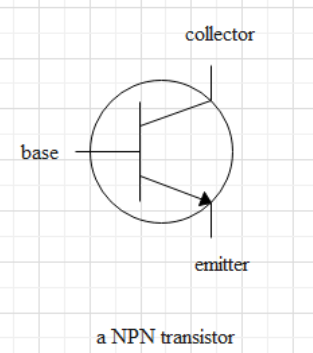
The word transistor is a combination of transfer and resistance. This is because it transfers the resistance from one end of the device to the other end or we can say, transfer of resistance. Hence, the name transistor.
Transistors have very high input resistance and very low output resistance. It is a three terminal device. One terminal is called the control terminal because the voltage in this terminal controls the resistance between the remaining two terminals.
A vacuum tube is a sealed glass tube inside of which is in near vacuum condition and allows the controlled passage of electric current. It can control the flow of electrons inside and is used as a switch and amplifier in electric equipment.
Because of the many advantages of transistors over the vacuum tubes nowadays, transistors are used.
Advantages of transistors over vacuum tubes are-
1). Transistors are smaller than the vacuum tubes.
2). Transistors cost lower than the vacuum tubes.
3). Transistors consume low power, less heat waste while the vacuum tubes need more power.
4). Transistors have higher efficiency than vacuum tubes.
5). Transistors have a long life period.
6). Since transistors are small and produce less heat waste these are preferred for small electrical circuits.
Note: We have two types of transistors – BJT and FET. BJT or the bipolar junction transistors are classified as NPN and PNP transistors. The FET or field effect transistors are classified as JFET or junction field effect transistor and MOSFET or metal oxide semiconductor field effect transistor.
Complete step by step answer:
Transistors are semiconductors devices with the help of which we can obtain the desired current and voltage. It can be used as a switch and as amplifiers.
The word transistor is a combination of transfer and resistance. This is because it transfers the resistance from one end of the device to the other end or we can say, transfer of resistance. Hence, the name transistor.
Transistors have very high input resistance and very low output resistance. It is a three terminal device. One terminal is called the control terminal because the voltage in this terminal controls the resistance between the remaining two terminals.
A vacuum tube is a sealed glass tube inside of which is in near vacuum condition and allows the controlled passage of electric current. It can control the flow of electrons inside and is used as a switch and amplifier in electric equipment.
Because of the many advantages of transistors over the vacuum tubes nowadays, transistors are used.
Advantages of transistors over vacuum tubes are-
1). Transistors are smaller than the vacuum tubes.
2). Transistors cost lower than the vacuum tubes.
3). Transistors consume low power, less heat waste while the vacuum tubes need more power.
4). Transistors have higher efficiency than vacuum tubes.
5). Transistors have a long life period.
6). Since transistors are small and produce less heat waste these are preferred for small electrical circuits.
Note: We have two types of transistors – BJT and FET. BJT or the bipolar junction transistors are classified as NPN and PNP transistors. The FET or field effect transistors are classified as JFET or junction field effect transistor and MOSFET or metal oxide semiconductor field effect transistor.
Recently Updated Pages
Master Class 12 Economics: Engaging Questions & Answers for Success

Master Class 12 Physics: Engaging Questions & Answers for Success
Master Class 12 English: Engaging Questions & Answers for Success
Master Class 12 Social Science: Engaging Questions & Answers for Success
Master Class 12 Maths: Engaging Questions & Answers for Success
Master Class 12 Business Studies: Engaging Questions & Answers for Success
Trending doubts
Which are the Top 10 Largest Countries of the World?
What are the major means of transport Explain each class 12 social science CBSE
Draw a labelled sketch of the human eye class 12 physics CBSE
Why cannot DNA pass through cell membranes class 12 biology CBSE
Differentiate between insitu conservation and exsitu class 12 biology CBSE
Draw a neat and well labeled diagram of TS of ovary class 12 biology CBSE