




Digestion of food in human starts from
A. Duodenum
B. Small Intestine
C. Mouth
D. Large intestine
Answer
 Verified
575.7k+ views
Hint: Digestion is the process where large and insoluble molecules of food are broken down into soluble particles for better absorption in the blood. In addition, digestive enzymes like amylase are released and are active in the mouth.
Complete answer:
Trypsinogen and chymotrypsinogen are organic process enzymes released by the small intestine. The endocrine hormones secreted by the duodenum into blood stimulates the secretion of the duct gland and liver. VIlikinin is freed by the small intestine mucous membrane and will increase the motility of villi.
-The small intestine is the most significant organ of the gastrointestinal system as a result of it carries the foremost digestion and absorption of digestion food. Food is exposed to many organic process enzymes in the small intestine solely. The ileum of the tiny intestine includes a massive expanse that helps within the absorption of digestible food.
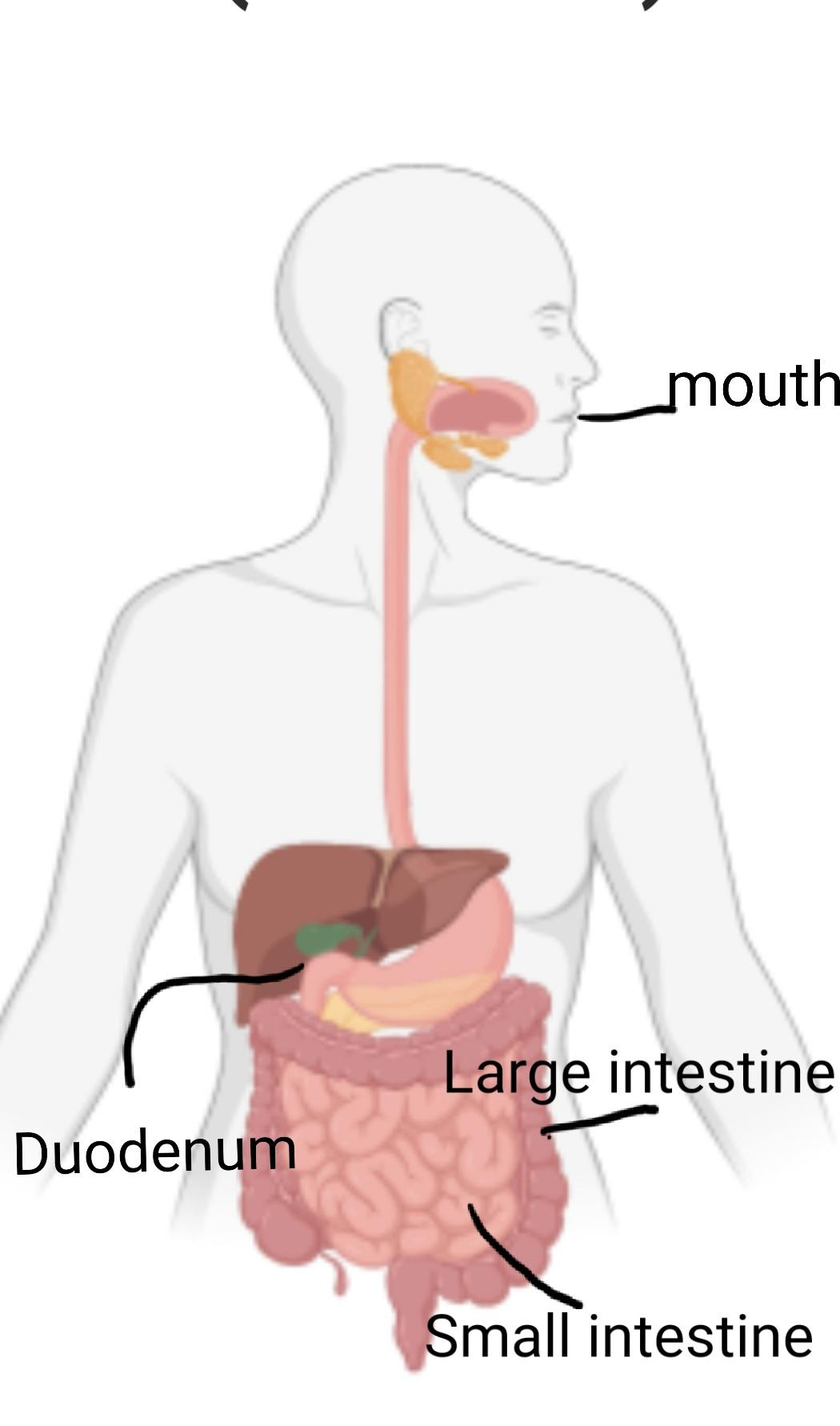
-Mouth or the oral fissure contains teeth, tongue, and secretion glands called salivary glands. The teeth grind the food (mastication), the tongue helps within the movement of food within the cavity whereas saliva from the salivary glands contains lipase and enzyme amylase that partly digests the sugar and fat content in food. The resultant of this method may be a softball referred to as the bolus.
-The major performance of the big gut is to soak up water from the remaining uneatable food matter and take away the waste product from the body. Also, absorption of nutrients is often simply applied however the excreta are reduced in volume and a semi-solid coherent mass as a result of most of the water is absorbed in the large intestine.
So, the correct answer is option C-Mouth.
Note: Mouth is the starting of the systema alimentarium that plays a crucial role in digestion. The role of the Mouth in the process of digestion is as follows,
-Food is crushed into tiny parts by the teeth.
-It mixes with spittle and also the catalyst enzyme (found in saliva), which breaks down starch into sugars. The tongue helps in a thorough mix of food with spittle, which helps in swallowing of food known as a bolus.
Complete answer:
Trypsinogen and chymotrypsinogen are organic process enzymes released by the small intestine. The endocrine hormones secreted by the duodenum into blood stimulates the secretion of the duct gland and liver. VIlikinin is freed by the small intestine mucous membrane and will increase the motility of villi.
-The small intestine is the most significant organ of the gastrointestinal system as a result of it carries the foremost digestion and absorption of digestion food. Food is exposed to many organic process enzymes in the small intestine solely. The ileum of the tiny intestine includes a massive expanse that helps within the absorption of digestible food.
-Mouth or the oral fissure contains teeth, tongue, and secretion glands called salivary glands. The teeth grind the food (mastication), the tongue helps within the movement of food within the cavity whereas saliva from the salivary glands contains lipase and enzyme amylase that partly digests the sugar and fat content in food. The resultant of this method may be a softball referred to as the bolus.
-The major performance of the big gut is to soak up water from the remaining uneatable food matter and take away the waste product from the body. Also, absorption of nutrients is often simply applied however the excreta are reduced in volume and a semi-solid coherent mass as a result of most of the water is absorbed in the large intestine.
So, the correct answer is option C-Mouth.
Note: Mouth is the starting of the systema alimentarium that plays a crucial role in digestion. The role of the Mouth in the process of digestion is as follows,
-Food is crushed into tiny parts by the teeth.
-It mixes with spittle and also the catalyst enzyme (found in saliva), which breaks down starch into sugars. The tongue helps in a thorough mix of food with spittle, which helps in swallowing of food known as a bolus.
Recently Updated Pages
Master Class 11 Computer Science: Engaging Questions & Answers for Success

Master Class 11 Business Studies: Engaging Questions & Answers for Success
Master Class 11 Economics: Engaging Questions & Answers for Success
Master Class 11 English: Engaging Questions & Answers for Success
Master Class 11 Maths: Engaging Questions & Answers for Success
Master Class 11 Biology: Engaging Questions & Answers for Success
Trending doubts
One Metric ton is equal to kg A 10000 B 1000 C 100 class 11 physics CBSE
There are 720 permutations of the digits 1 2 3 4 5 class 11 maths CBSE
Discuss the various forms of bacteria class 11 biology CBSE
Draw a diagram of a plant cell and label at least eight class 11 biology CBSE
State the laws of reflection of light
Explain zero factorial class 11 maths CBSE