




In Ascaris Lumbricoides, the males and females can be identified externally by a certain character. The phenomenon is called
(a) Polymorphism
(b) Dimorphism
(c)Anisogamy
(d) Regeneration
Answer
 Verified
576.6k+ views
Hint: This is the phenomenon that shows the difference in the phenotype such as color, shape, size, and structure, between the males and the females of the same species.
Complete answer:
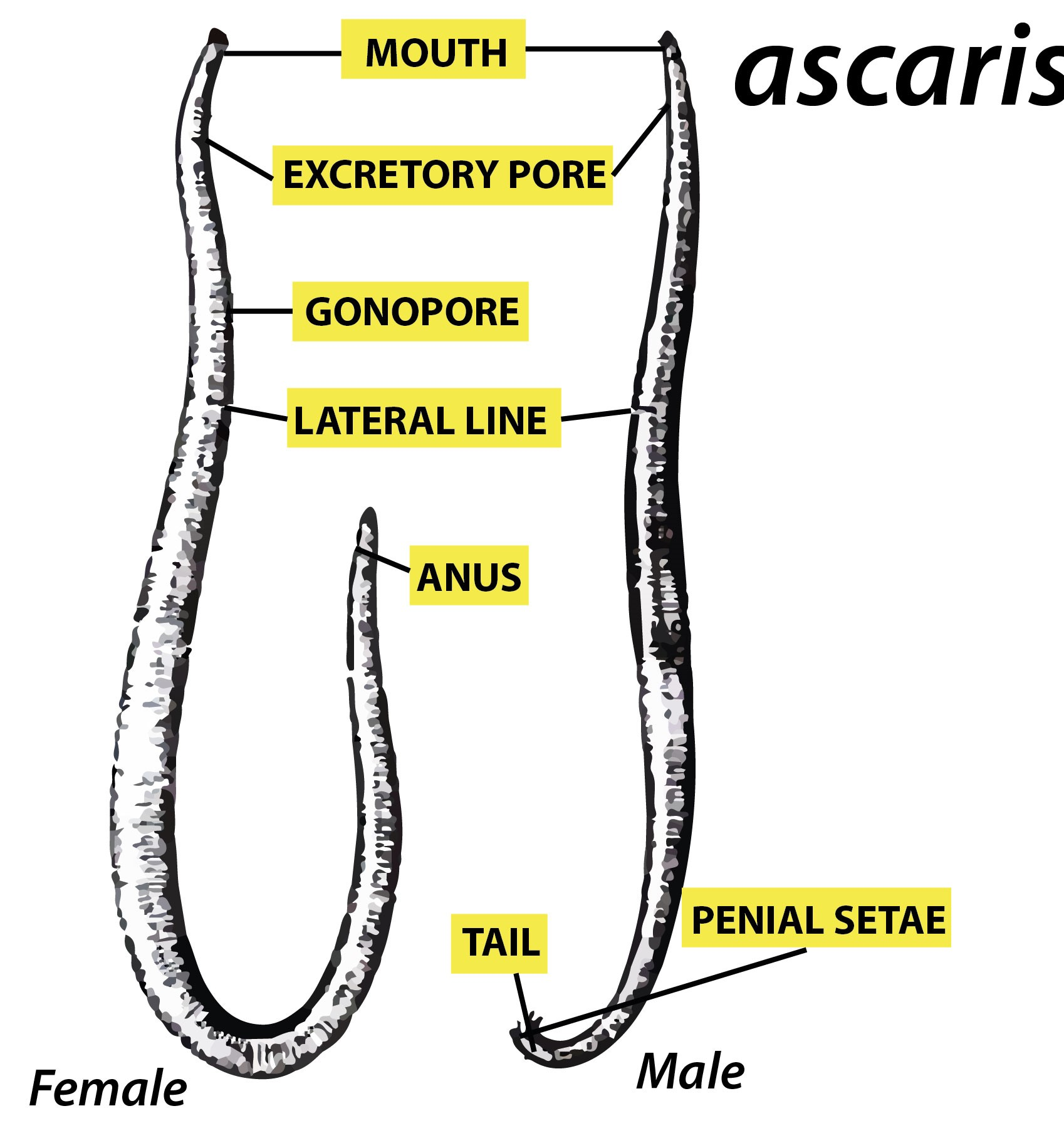
In Ascaris Lumbricoides, the males and females can be identified externally by a certain character. The phenomenon is called dimorphism. In dimorphism, the differences in appearance between males and females of the same species, such as in color, shape, size, and structure, are found. These differences are caused by the inheritance of one or the other sexual pattern in the genetic material.
Additional Information: -In Ascaris Lumbricoides, the females are wider which means 3-6mm in diameter and length can grow up to 20 to 49 cm long.
-The males are thinner that means 2-4 mm in diameter and grow up to 15 to 30 cm long.
-After examining the posterior end of the worms, we will find that the females of Ascaris Lumbricoides are straight whereas the males are having hooked posterior ends.
-The phenomenon of polymorphism occurs when two or more different phenotypes exist in the same population of a species.
-Anisogamy is a type of sexual reproduction involving the union or fusion of two dissimilar gametes.
-The process of regeneration means the process of renewal, restoration, and growth that makes genomes, cells, and organisms.
So, the correct answer is,’ Dimorphism’.
Note: -In dimorphism, the male and the female of a species look noticeably different.
-The differences are caused by the inheritance of one or the other sexual pattern in the genetic material.
-In Ascaris Lumbricoides, females are straight whereas the males are having hooked posterior ends.
Complete answer:
In Ascaris Lumbricoides, the males and females can be identified externally by a certain character. The phenomenon is called dimorphism. In dimorphism, the differences in appearance between males and females of the same species, such as in color, shape, size, and structure, are found. These differences are caused by the inheritance of one or the other sexual pattern in the genetic material.
Additional Information: -In Ascaris Lumbricoides, the females are wider which means 3-6mm in diameter and length can grow up to 20 to 49 cm long.
-The males are thinner that means 2-4 mm in diameter and grow up to 15 to 30 cm long.
-After examining the posterior end of the worms, we will find that the females of Ascaris Lumbricoides are straight whereas the males are having hooked posterior ends.
-The phenomenon of polymorphism occurs when two or more different phenotypes exist in the same population of a species.
-Anisogamy is a type of sexual reproduction involving the union or fusion of two dissimilar gametes.
-The process of regeneration means the process of renewal, restoration, and growth that makes genomes, cells, and organisms.
So, the correct answer is,’ Dimorphism’.
Note: -In dimorphism, the male and the female of a species look noticeably different.
-The differences are caused by the inheritance of one or the other sexual pattern in the genetic material.
-In Ascaris Lumbricoides, females are straight whereas the males are having hooked posterior ends.
Recently Updated Pages
Master Class 12 Economics: Engaging Questions & Answers for Success

Master Class 12 Physics: Engaging Questions & Answers for Success
Master Class 12 English: Engaging Questions & Answers for Success
Master Class 12 Social Science: Engaging Questions & Answers for Success
Master Class 12 Maths: Engaging Questions & Answers for Success
Master Class 12 Business Studies: Engaging Questions & Answers for Success
Trending doubts
Which are the Top 10 Largest Countries of the World?
What are the major means of transport Explain each class 12 social science CBSE
Draw a labelled sketch of the human eye class 12 physics CBSE
Why cannot DNA pass through cell membranes class 12 biology CBSE
Differentiate between insitu conservation and exsitu class 12 biology CBSE
Draw a neat and well labeled diagram of TS of ovary class 12 biology CBSE