




Which center is stimulated during an increase in body temperature?
a) anterior hypothalamus
b) posterior hypothalamus
c)limbic system
d)red nucleus
Answer
 Verified
567k+ views
Hint: An increase in the body temperature is stimulated by the hypothalamus region of the brain. When we exercise or do strains activity our body temperature increases and when we are in a relaxed state then the body temperature tends to decrease or stay normal.
Complete answer:
The body temperature is regulated by the posterior part of the hypothalamus. The increase in the body temperature is due to the presence of a foreign particle entering our body and causing infection. This leads to an increase in the body temperature and causes fever. An increase in the body temperature is also caused when the body is exercising or doing vigorous activity. The increase of the body temperature when one gets scared. These increases in body temperature are brought back to normal by sweating and shivering. These activities are controlled by the posterior part of the brain.
Additional Information: Hypothalamus is a crucial part of the brain and has various functions. It is used to release various hormones, regulates the body temperature, controls the hunger, manages the sexual desires, and regulates the emotional responses given by a person. The anterior hypothalamus region is responsible for the release of corticotropin releasing hormone, thyrotropin releasing hormone, oxytocin, and vasopressin. The anterior part also regulates the sleep-wake cycle in human beings.
So, the answer is ‘posterior hypothalamus’.
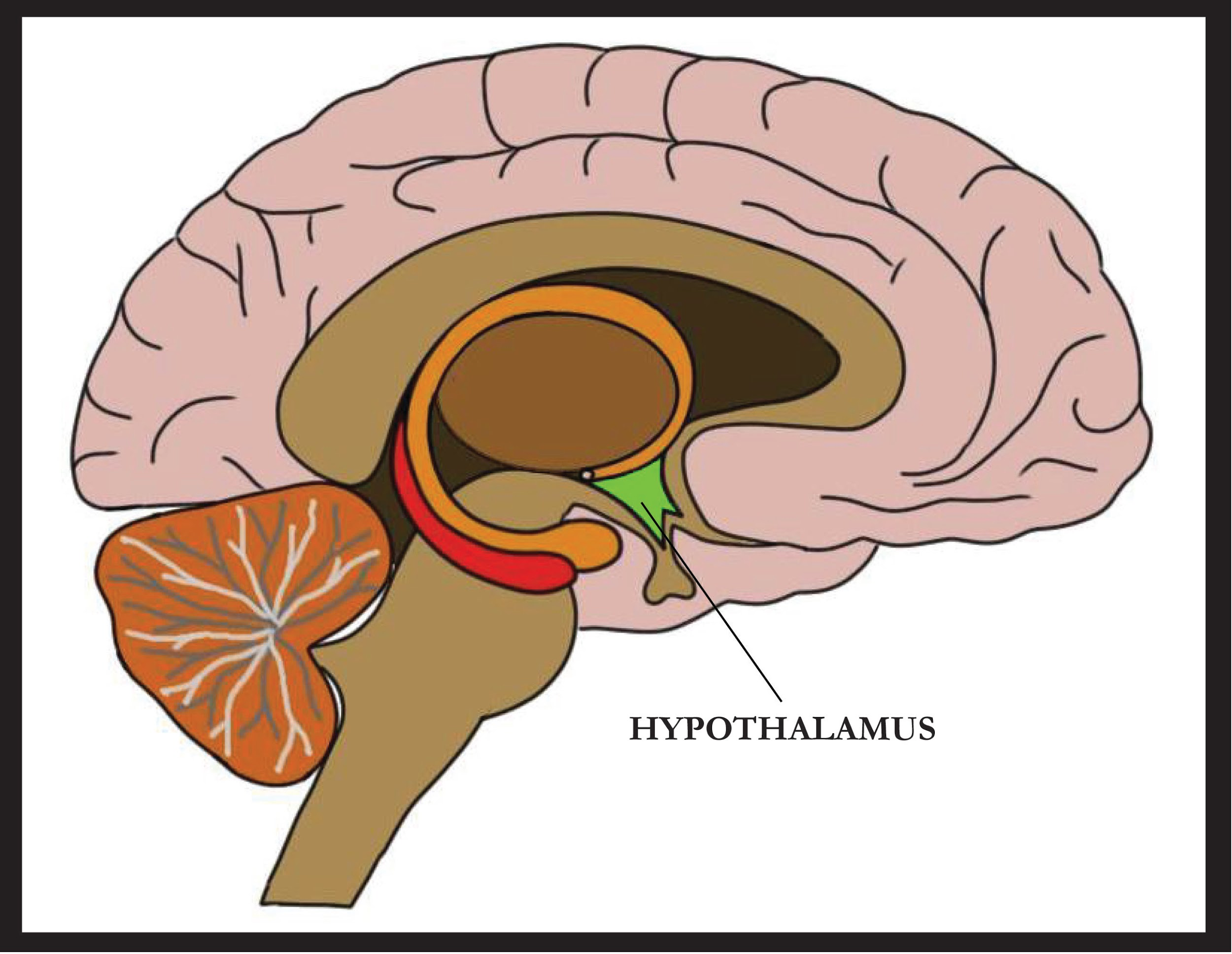
Note: The posterior part of the hypothalamus is responsible for hypothalamus is the regulation of the body temperature. The increase and decrease in the body temperature are brought by this region. The increased body temperature is reduced by the shivering or sweating.
Complete answer:
The body temperature is regulated by the posterior part of the hypothalamus. The increase in the body temperature is due to the presence of a foreign particle entering our body and causing infection. This leads to an increase in the body temperature and causes fever. An increase in the body temperature is also caused when the body is exercising or doing vigorous activity. The increase of the body temperature when one gets scared. These increases in body temperature are brought back to normal by sweating and shivering. These activities are controlled by the posterior part of the brain.
Additional Information: Hypothalamus is a crucial part of the brain and has various functions. It is used to release various hormones, regulates the body temperature, controls the hunger, manages the sexual desires, and regulates the emotional responses given by a person. The anterior hypothalamus region is responsible for the release of corticotropin releasing hormone, thyrotropin releasing hormone, oxytocin, and vasopressin. The anterior part also regulates the sleep-wake cycle in human beings.
So, the answer is ‘posterior hypothalamus’.
Note: The posterior part of the hypothalamus is responsible for hypothalamus is the regulation of the body temperature. The increase and decrease in the body temperature are brought by this region. The increased body temperature is reduced by the shivering or sweating.
Recently Updated Pages
Master Class 11 Computer Science: Engaging Questions & Answers for Success

Master Class 11 Business Studies: Engaging Questions & Answers for Success
Master Class 11 Economics: Engaging Questions & Answers for Success
Master Class 11 English: Engaging Questions & Answers for Success
Master Class 11 Maths: Engaging Questions & Answers for Success
Master Class 11 Biology: Engaging Questions & Answers for Success
Trending doubts
One Metric ton is equal to kg A 10000 B 1000 C 100 class 11 physics CBSE
There are 720 permutations of the digits 1 2 3 4 5 class 11 maths CBSE
Discuss the various forms of bacteria class 11 biology CBSE
Draw a diagram of a plant cell and label at least eight class 11 biology CBSE
State the laws of reflection of light
Explain zero factorial class 11 maths CBSE