




Which of the following parts of sperm is called an ‘energy chamber’?
(A) Head
(B) Tail
(C) Middle piece
(D) Neck
Answer
 Verified
504.6k+ views
Hint: It is the part of the sperm which is known as the energy chamber that contains the mitochondria in it, and we already know that mitochondria are the powerhouse of the cell. The sperm cells can survive up to 5 days inside the female reproductive tract after coitus.
Complete solution:
The midpiece of a sperm carries about 70 mitochondria, which is the source of energy (ATP). The mitochondria provide sufficient energy which is required for propulsion as the cell travels towards the feminine gamete. The mitochondria which are present in the sperm cells are discarded once the sperm head penetrates the egg.
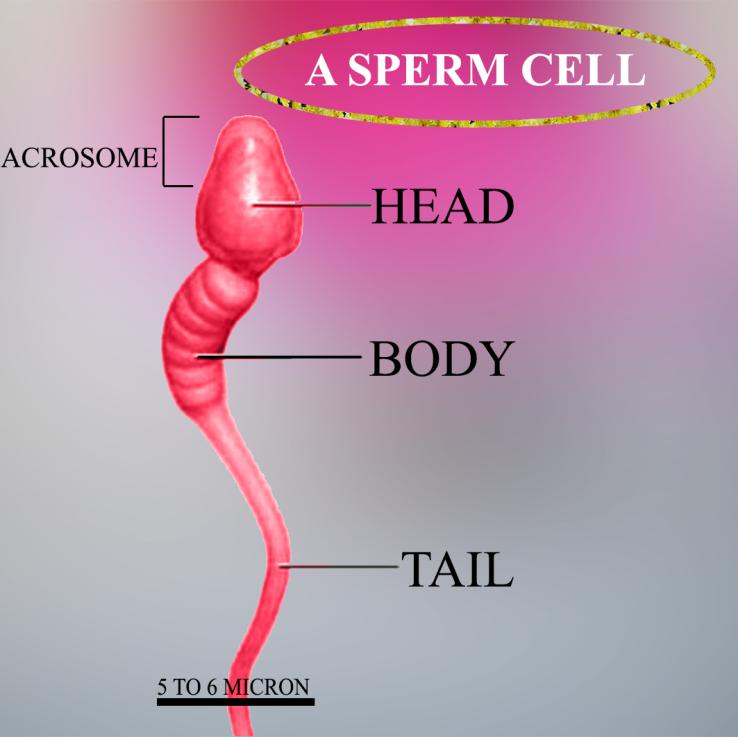
-The human sperm can be divided into the head, the neck, the middle piece, and the tail.
-The entire body of the sperm cell is enveloped by a plasma membrane.
-The genetic material is enclosed in an elongated haploid nucleus that is present in the head region. The anterior portion of the head is mostly covered with a structure that looks like a cap and is known as the acrosome.
-The acrosome contains enzymes like hyaluronidase which help in the fertilization of the ovum.
-The middle piece of the sperm cell contains mitochondria that are responsible for providing energy for the movement of the tail. This facilitates sperm motility that is essential for fertilization.
-The tail is termed as flagellum and is the longest part of the sperm. Its wave-like motion Moves the sperm forward and aids it in swimming and penetrating the egg.
So, the correct answer is ‘Middle piece’.
Note:
Sperm cells are not able to divide and have a limited lifespan. The human male ejaculates somewhat 200-300 million sperm in one coitus. In normal fertility in a healthy human, a minimum of 60 minutes of the sperms must have normal structure and size and a minimum of 40 you take care of must show rigorous motility.
Complete solution:
The midpiece of a sperm carries about 70 mitochondria, which is the source of energy (ATP). The mitochondria provide sufficient energy which is required for propulsion as the cell travels towards the feminine gamete. The mitochondria which are present in the sperm cells are discarded once the sperm head penetrates the egg.
-The human sperm can be divided into the head, the neck, the middle piece, and the tail.
-The entire body of the sperm cell is enveloped by a plasma membrane.
-The genetic material is enclosed in an elongated haploid nucleus that is present in the head region. The anterior portion of the head is mostly covered with a structure that looks like a cap and is known as the acrosome.
-The acrosome contains enzymes like hyaluronidase which help in the fertilization of the ovum.
-The middle piece of the sperm cell contains mitochondria that are responsible for providing energy for the movement of the tail. This facilitates sperm motility that is essential for fertilization.
-The tail is termed as flagellum and is the longest part of the sperm. Its wave-like motion Moves the sperm forward and aids it in swimming and penetrating the egg.
So, the correct answer is ‘Middle piece’.
Note:
Sperm cells are not able to divide and have a limited lifespan. The human male ejaculates somewhat 200-300 million sperm in one coitus. In normal fertility in a healthy human, a minimum of 60 minutes of the sperms must have normal structure and size and a minimum of 40 you take care of must show rigorous motility.
Recently Updated Pages
Master Class 12 Economics: Engaging Questions & Answers for Success

Master Class 12 Physics: Engaging Questions & Answers for Success
Master Class 12 English: Engaging Questions & Answers for Success
Master Class 12 Social Science: Engaging Questions & Answers for Success
Master Class 12 Maths: Engaging Questions & Answers for Success
Master Class 12 Business Studies: Engaging Questions & Answers for Success
Trending doubts
Which are the Top 10 Largest Countries of the World?
What are the major means of transport Explain each class 12 social science CBSE
Draw a labelled sketch of the human eye class 12 physics CBSE
What is a transformer Explain the principle construction class 12 physics CBSE
Why cannot DNA pass through cell membranes class 12 biology CBSE
Differentiate between insitu conservation and exsitu class 12 biology CBSE